


Way back in 2018, I wrote a column called “Fake news? Blame God”. In it, I suggested that we shouldn’t be calling it fake news. “It’s actually faith-based news, and its essential motor has been with us for at least as long as recorded history. Yes, religion: a belief in god (or gods) exactly parallels susceptibility to fake news.”
We don’t use the term fake news anymore. It’s now called information manipulation and interference, or more imprecisely, attacks on info-integrity. My central point still holds, though. I wasn’t suggesting that religious people are susceptible to fake news because they are stupid, but because a system of meaning that is built on faith rather than facts means that, when we are trying to fight back against the tide of disinformation, which in 2026 is now the tide of AI slop and deep fakes, we are very much on the backfoot.
The organisation I work for operates on the frontline of information integrity, and specifically FIMI (foreign information manipulation and interference). This means that a lot of what we do involves measuring and monitoring trust, and specifically trust in news. [Read my contribution on South Africa in the 2026 Reuters Digital News Report, for example.] Increasingly, I am starting to think that the word trust is outmoded when it comes to the way people consume information. It’s more abaout what you believe in, rather than who you trust. And, as for truth - that ship has sunk a long time ago.
I was reminded of my 2018 musings on the relationship between religion and digital disinformation by this quote from OpenAI’s Sam Altman, which I read in Karen Hao’s book Empire of AI: Inside the reckless race for total domination.
“‘Successful people create companies. More successful people create countries. The most successful people create religions.’ I heard this from Qi Lu; I’m not sure what the source is. It got me thinking, though - the most successful founders do not set out to create companies. They are on a mission to create something closer to a religion, and at some point it turns out that forming a company is the easiest way to do so.” - Sam Altman, 2013.
That’s pretty clear, isn’t it. The man behind ChatGPT understands that what he has helped build isn’t a font of factual information, it’s a distribution mechanism for belief systems.
I get to work on AI strategy, policy, solutions and builds as part of my job, but as you can imagine there’s not a lot of call for what I think of as a philosophy of AI. I’m using the term philosophy here in the way it’s used in China Mieville’s wonderful novel Railsea (2013).
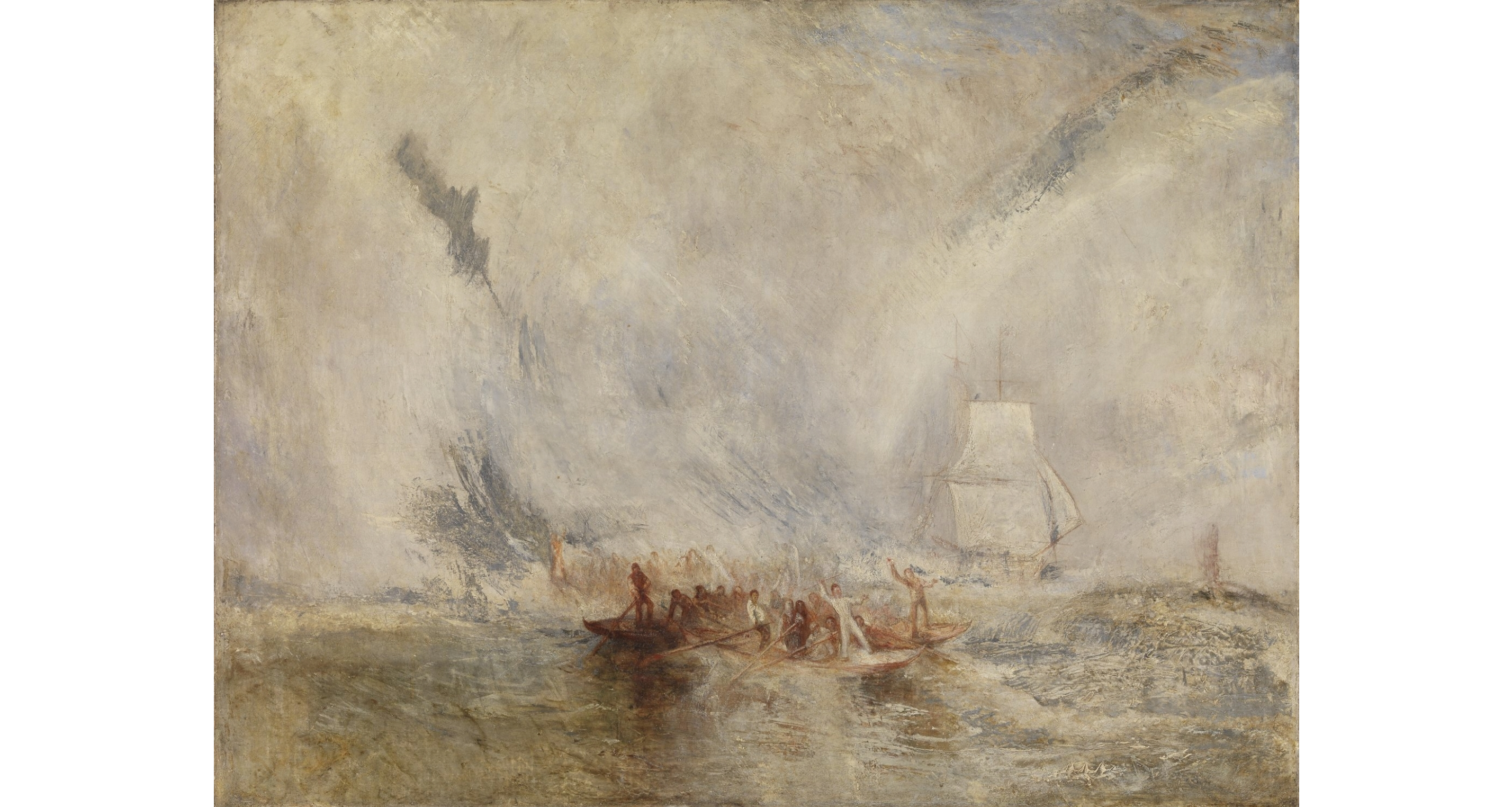
The novel is a steampunk reimagining of Herman Melville’s Moby-Dick. And mystifyingly, despite having read it at least three or four times, this is the first time I’ve noticed the coincidence of surnames. The novel’s world is covered by an endless ocean of train tracks rather than water, and instead of whales, trains hunt massive, carnivorous burrowing moles called moldywarpes. The relationship between a train captain and the specific beast they hunt is explicitly called a “philosophy”. Whenever a captain is maimed by a particularly distinct creature, hunting down that beast becomes the purpose of their life, although it is a more complex relationship than that. As with Moby-Dick, the beast itself is also, in some way, hunting them.
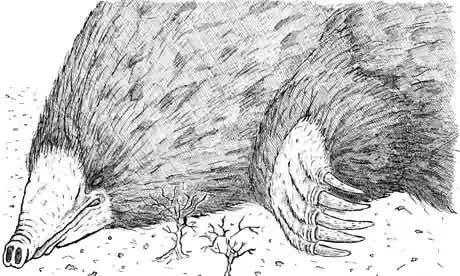
A central character, Captain Abacat Naphi (an anagram of Captain Ahab), who appears to have lost a limb to a moldywarpe called Mocker-Jack (it turns out that she is faking this, which we can probably read as another allegory with AI), describes the uneasy, uneven relationship within this philosophy. “You know how careful are philosophies. How meanings are evasive. They hate to be parsed. Here again came the cunning of unreason. I was creaking, lost, knowing that the ivory-coloured beast had evaded my harpoon & continued his opaque diggery, resisting close reading & a solution to his mystery. I bellowed, & swore that one day I would submit him to a sharp & bladey interpretation.”
In Railsea, philosophies generally signify only one thing, such as speed or unrequitedness, but for Naphi Mocker-Jack, in an echo of AI today, signifies everything. We all need a philosophy when it comes to AI, “a sharp & bladey interpretation”. The general consensus among those who are closest to the beast is that AI, left unchecked, will destroy humanity. Some, like Anthropic’s Dario Amodei, leave the time frame open, although an Anthropic researcher has warned that AI is advancing so quickly, there is a greater than 10% chance it “could kill all humans” within the next decade. AI safety expert Roman Yampolskiy has estimated that artificial intelligence will surpass human capabilities in 1 to 5 years, with a 99% to 99.9% probability of human extinction once superintelligence is created.
All of which is to suggest that as humans, we need, at the very least, to think about how we want to live with AI. In that spirit, here are some aspects of my AI philosophy, culled from articles I’ve written over the last while.
Following on from my original thoughts on how belief systems overdetermine our relation to truth and trust, is the way the machine is replacing god(s) for so many people. Who needs the uncaring, unresponsive gods of traditional religion when your new gods, like Japan’s AI Buddhist robot, or Switzerland’s (and Twitch’s) AI Jesus, actually bother to answer your prayers. Commercial technology platforms are profiting from the same thing that commercial religion (and fundamentally, all religions are commercial) has for so long. Algorithmically inscribed idols, synthetic companions and chatbots are replacing religious functionaries at a rapid rate. And just like them, AI is exploiting spiritual longing and emotional vulnerabilities for profit.
Let’s not write off religion entirely, though. In a column called God in the age of AI, I quote the Pope Francis’ 2025 doctrinal note Antiqua et Nova’s warning against replacing authentic human relationships. His comments about the difference between what AI does, and what humans do, resonate. “Together, we can seek the truth in dialogue, in relaxed conversation or in passionate debate. To do so calls for perseverance; it entails moments of silence and suffering, yet it can patiently embrace the broader experience of individuals and peoples. The process of building fraternity, be it local or universal, can only be undertaken by spirits that are free and open to authentic encounters.” [Reader, mark this as one of the ambitions of this Substack.]
There’s also the not insubstantial matter of AI hype. In a column called “Inside AI’s big con”, I wrote about Emily Bender and Alex Hanna’s book, The AI Con. The authors discuss how public faith in machine sentience is inflated by an economic hype engine of “doomsters” and “boosters,” obscuring the technical reality that Large Language Models are merely pattern-matching tools operating without comprehension, ethics, or guaranteed truth. They “lambaste the way Big Tech and its remoras - the AI consultants and shills feeding off the main body - drown us in AI hype, basically lying about the capabilities of the large language models that underpin the workings of AI.
“They also take issue with how its praise singers anthropomorphise AI so that they can obscure the fact that it’s just a machine, and make the point that AI is mostly used by businesses as a tool to devalue human labour across various industries.”
For Africans, the devaluing of human labour is also about a type of colonial extraction. In a keynote at the World Association of Newspapers’ Digital Media Africa conference in Nairobi in 2025 conference, I spoke about how the rapid development of AI is increasingly becoming an arms race between nations like the US and China, with a few lesser players hunting around the fringes of what is, if you look at it a certain way, just a continuation of the Cold War. And as happened with the original Cold War, African nations are going to become pawns in AI’s geopolitical game.
There are, certainly, some alluring and valuable aspects of surrendering to the robots. For that excellent, exciting publication The African Imaginary (follow them on your platforms of choice), I wrote about whether African creatives should work with AI, concluding that “ if creatives don’t understand the colonising power of AI, and don’t always have that in the front of their minds, we’ll end up in a place where we just become a conduit of raw material to the AI empire of the west (and of China, but that’s a discussion for another day) along those cables that mimic the Atlantic Crossing of slavery”.
We aren’t going to fully form our philosophy of AI. Something that makes sense today won’t make sense tomorrow. Our philosophy will have to mimic the evolution of AI itself, and increasingly, we’re going to run out of choices. AI will choose us. As I wrote in “Survival in the time of AI”, the current climate of loathing towards AI and specifically AI slop, the dung with which it marks its territory, is healthy. But the unfortunate truth is that AI is also an incredibly useful technology, and we won’t get to keep the good bits and throw out the bad. We need a survival strategy.
“Sadly, the more you become part of the AI Empire, the more you risk having your soul turned into raw material for the robots. You can choose if you want to use AI or not, but you don’t get a choice about the fact that AI is going to use you. You don’t really have a feasible way to opt out of a technology that is reshaping the world.”
So how are we going to push back against the machine that is rendering us obsolete? That’s the question that I’m going to grapple with in articles going forward. It’s also the reason I’ve started this Substack, which I’ve called Scribble in a homage both to Scribbledehobble, the name James Joyce gave to his work in progress notebook for Finnegans Wake, and to this extract from that wonderful book. “It is a pinch of scribble, not wortha bottle of cabbis. Overdrawn! Puffedly offal tosh!”
Puffedly offal tosh is a pretty good description of AI slop. And this slop is the medium through which we must needs voyage on our hunt for the AI moldeywarpe. I’m hoping we can evolve a philosophy that can keep us human, and keep us an integral part of the way meaning is created and consumed.